



launchpad on pons · Robinhood chain 4663
Launch a coin.
Its fees open packs.
PonsPad is a launchpad on pons. Every coin's creator fees buy real graded Pokémon packs for its holders — opened live, drawn from a Robinhood-chain block anyone can check.
How it works
Name it, one signature.
Create a coin on pons in seconds. It trades on the bonding curve, then graduates to the open market.
The pot fills as it trades.
Every trade pays a 0.30% creator fee — 80% of it flows into that coin's own pack pot, locked seconds after launch.
Real packs, real winners.
At $50 the pot opens a real graded Pokémon pack for its holders. The winner is drawn from a block.
Coins
Launch, trade, watch the pot fill. Every coin below is a shell placeholder until it goes live.
The pulls
Every graded card PonsPad opens, with its winner. Real slabs held as NFTs.
The fee split
Every trade pays a 0.30% creator fee, split two ways by pons's own fee-sharing program. Both recipients are written into the coin at launch.
Fills the pack pot
Of every coin's creator fees flows into that coin's own pot. When it hits a pack price, PonsPad opens a real graded Pokémon pack for its holders.
Buys and burns $PAD
The rest buys the platform coin and burns it. Every launch on PonsPad shrinks the $PAD supply.
Locked at launch
Enforced by pons's programs. The moment a coin launches, these are set and can't be changed.
Two addresses, written in.
The 80/20 split and its two recipients — the pack pot and the burn wallet — are locked into the coin at launch.
Bonding curve, set once.
The curve and its graduation to the open market are fixed at launch, never re-tuned.
No mint, no freeze.
The mint has no mint or freeze authority. Burned liquidity stays burned.
Check the draw yourself.
Every pack's winner is drawn from a Robinhood-chain block. The block, the entries and the weights are all public — anyone can replay the draw and confirm it. Only real wallets enter: pools, curves, vaults and programs never do.
seed 0x9c41…7d2e
Live
Coins
Every coin launched on PonsPad. Trades draw the first line; the pot fills from there.
…
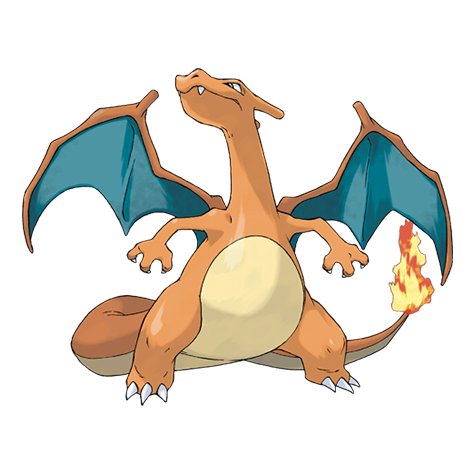 Charizard
next pack for this coin
Launch a coin
Name it, add an image, one signature. Its creator fees open real graded Pokémon packs for its holders.
Your Coinlive preview
The pulls
Every graded card PonsPad has opened — real slabs, held as NFTs in a vault.
Whitepaper
Every fee opens a pack. The complete specification of PonsPad.
1. Abstract
PonsPad is a token launchpad built on pons (the Robinhood chain, chain ID 4663). It lets anyone create a tradeable token in a single signature, following the same launch factory model that made pump.fun the default for memecoin issuance. PonsPad is not the issuer — it is a risk layer and a distribution layer on top of the assets that already launch on pons.
What PonsPad adds is a pack machine. Every trade of a launched coin pays a creator fee. Most of that fee flows into the coin's own pack pot. When the pot reaches the price of one graded pack, PonsPad opens a real, professionally graded Pokémon card (PSA, CGC, or BGS) and awards it to a holder, selected by a publicly verifiable on-chain draw.
2. Introduction
2.1 The problem
On a conventional launchpad, creator fees are an accounting line item. They are extracted from trading volume and sent to a creator wallet or treasury — and from the holder's point of view, they simply vanish. The trader pays the fee, the curve moves, and the fee leaves no trace that benefits the community that generated it.
2.2 The PonsPad answer
PonsPad converts the fee stream into verifiable, physical scarcity — graded Pokémon cards — and gives it back to holders. A fee that would otherwise disappear becomes a pack pot that fills as the coin trades, and a draw that anyone can audit.
3. The pons Ecosystem
- Chain ID: 4663 · EVM-compatible
- Native asset: ETH
- Graduation: Uniswap V4 pools on pons
- Launch factory:
0x7eD598BcEf8bd9Edd8C97A195C6d13f40801EC7e
PonsPad coins are standard pons launch tokens. They trade on a bonding curve, graduate to Uniswap V4, and appear in every wallet and terminal. PonsPad layers the pack machine on top of the existing factory.
4. The Launch Mechanism
4.1 One signature
Creating a coin requires a single signature. The creator supplies name, symbol, logo, description, optional socials, and a creator fee recipient. The transaction calls launchToken(...) and carries the launch fee (launchFee(), currently 0.0005 ETH).
4.2 The bonding curve
The coin trades on a bonding curve whose parameters — supply, curve fee, phantom quote, graduation threshold, pool fee, tick spacing — are locked at launch and cannot be re-tuned. It launches, trades, then graduates when the curve reaches threshold, migrating liquidity to a Uniswap V4 pool.
4.3 The creator fee
Every trade pays a creator fee of 0.30% of volume. It is split two ways:
| Destination | Share | Purpose |
|---|---|---|
| Pack pot | 80% | Fills the coin's pot; opens graded packs for holders |
| Buy-and-burn $PAD | 20% | Buys $PAD from the market and burns it |
Both recipients are written into the coin at launch and cannot be changed afterward.
4.4 Lifecycle
launch → lock → distribute → to-packs → rip / pull → burn → graduate
5. The Pack Machine
5.1 The pot
Each coin has a pack pot, filled exclusively from 80% of its own creator fees. A coin with an active community fills fast; a quiet coin fills slowly or never. The pot is a live meter of community activity.
5.2 Opening a pack
At $50, PonsPad opens a real graded pack. The card is a genuine, professionally graded slab (PSA, CGC, or BGS), held in a vault and represented as an NFT.
5.3 The draw
The winner is selected by a provably fair draw: every eligible holder is an entry, weighted by holding; the seed derives from a Robinhood-chain block. The block, entries, weights, and selection logic are all public — anyone can replay the draw and confirm the winner.
5.4 Only real wallets enter
Pools, curves, vaults, and program addresses are excluded. The pack always goes to a person, never to infrastructure.
6. Tokenomics
6.1 $PAD — the platform coin
$PAD is a standard pons token. 20% of every coin's creator fees buys $PAD and burns it — every launch, trade, and pack applies continuous buy pressure to $PAD and shrinks its supply. $PAD's own fees follow the same 80/20 split.
6.2 No hidden allocation
There is no pre-mined team treasury, no dilutive mint, and no upgradeable proxy. The value accrual path is the fee split itself: holders receive real cards (via the pot), and $PAD holders receive supply reduction (via the burn).
7. Fairness & Security
- Locked at launch — the split, its two recipients, the curve, and the graduation parameters are set once and never changed.
- No mint, no freeze — the mint has no mint or freeze authority; burned liquidity stays burned.
- Provable draw — every pack draw is anchored to a block and independently verifiable.
- Honest disclosure — a pack does not make a coin worth anything; most pulls are worth less than the pack.
8. Technical Architecture
8.1 Contracts
- Launch factory:
0x7eD598BcEf8bd9Edd8C97A195C6d13f40801EC7e launchToken(...)— selector0xf35abbcf(payable)launchFee(),launchConfigCount(),getLaunchConfig(id)— viewpreviewLaunchEconomics(id, pairToken)— view → bytes32graduate(token)/createGraduatedPool(token)— graduationTokenLaunched— event topic00x8d4aad49…
8.2 launchToken signature
launchToken(
  (string name, string symbol, string logo, string description,
   (string twitter, string telegram, string discord,
    string website, string farcaster) socials,
   address creatorFeeRecipient, uint16 creatorTaxBps,
   bool buybackEnabled, bytes32 expectedEconomics, bytes32 salt) params,
  uint256 launchConfigId,
  address pairToken
) payable returns (address token, address curve)
8.3 Launch flow
Read launchFee() → read previewLaunchEconomics() → submit launchToken(params, launchConfigId, pairToken) with value = launchFee → factory emits TokenLaunched.
9. Roadmap
- Phase 1 — Launch. Single-signature launches; fee split locked; $PAD buy-and-burn live.
- Phase 2 — Pack machine. Pot accumulation, verified draws, graded-card distribution, draw auditing.
- Phase 3 — Indexing. Leaderboards, per-coin pack histories, holder-weight dashboards, open draw replay.
- Phase 4 — Curation. Verified communities, launch-curation tiers, card provenance.
10. Risk Factors
- Market risk — memecoins are extremely volatile and can lose all value.
- Collectible risk — graded cards are not liquid; most pulls are worth less than the pack.
- Regulatory risk — token issuance and collectibles may face evolving regulation.
- Smart-contract risk — the factory and curve are not audited by PonsPad.
- Liquidity risk — a low-volume coin may never fill a pack or graduate.
11. Disclaimer
This whitepaper is informational only and is not an offer, solicitation, or investment advice. Nothing herein guarantees any return. Participants are responsible for their own decisions and should conduct their own research. $PAD and PonsPad-launched tokens are not securities, and nothing in this document should be read as a promise of profit.